From Landlocked to Land-Linked: UN Resident Coordinator Briefs Member States and Cooperation Partners in Rwanda on the Awaza Programme of Action

.
Kigali, 2 October 2025 — Rwanda’s Government officials, representatives of the diplomatic community, Cooperation Partners and the UN Country Team gathered to reflect on the outcomes of the Third United Nations Conference on Landlocked Developing Countries (LLDC3), held in Awaza, Turkmenistan, and the implications of the Awaza Programme of Action (APoA) 2024–2034 for Rwanda’s long-term development goals.
Convened by the UN Resident Coordinator’s Office, the briefing provided an opportunity to unpack the new global framework designed to support landlocked developing countries overcome their unique structural constraints — from limited access to seaports, to high transport costs and trade bottlenecks.
A Decade of Action for Landlocked Countries
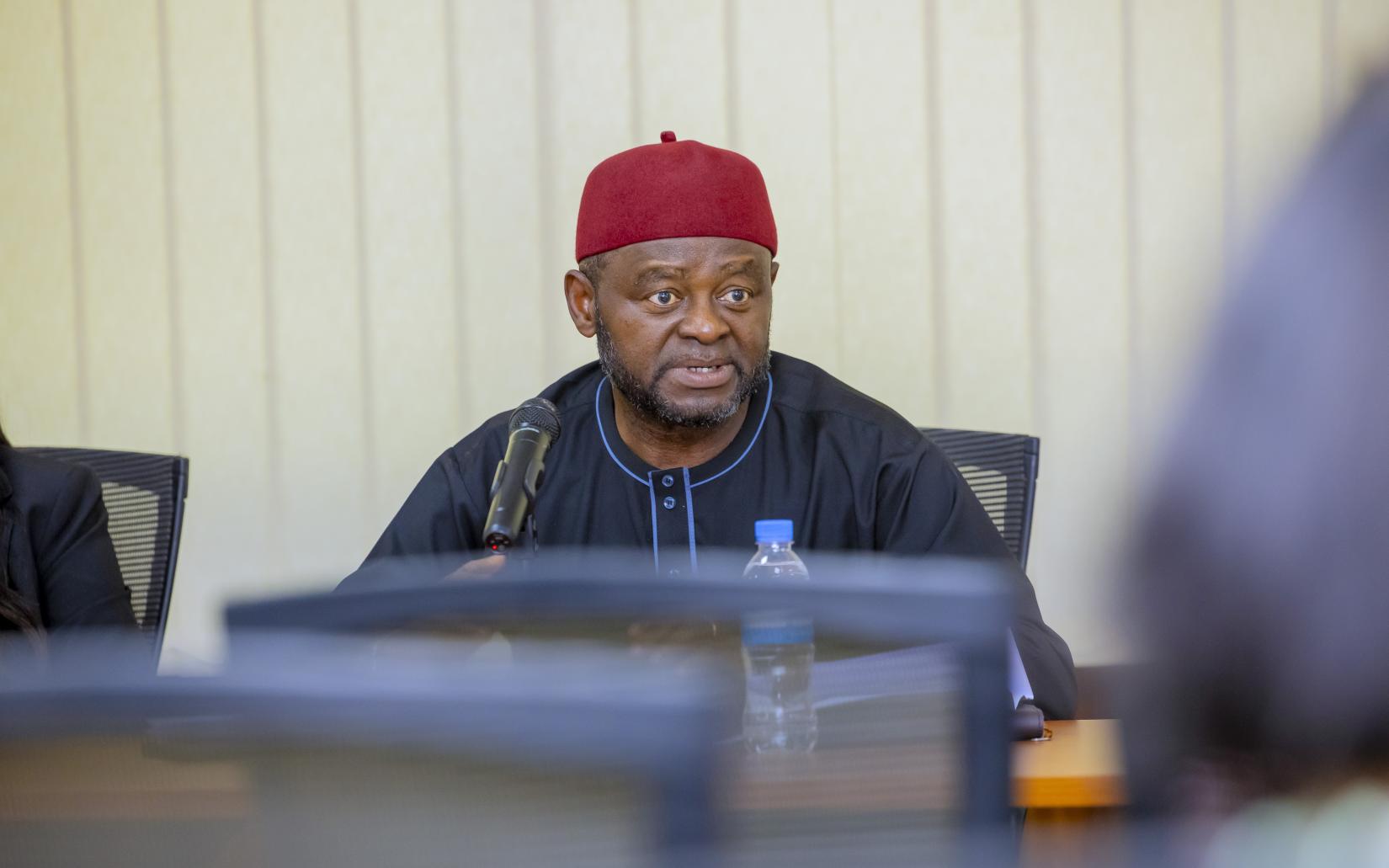
Opening the session, UN Resident Coordinator Ozonnia Ojielo emphasized that the Awaza Programme of Action marks the start of a decisive decade for landlocked nations like Rwanda.
“The Awaza Programme of Action is not just another global document,” he said. “It is a plan to help landlocked countries move from vulnerability to competitiveness — to transform geographic constraints into engines of innovation, integration, and shared growth.”
Ojielo underscored the need for stronger regional partnerships, better infrastructure, and smarter trade policies to make this transformation possible.
“Connectivity — physical, digital, and institutional — will be at the heart of implementation. The countries that succeed under Awaza will be those that build regional value chains, not just roads.”
Building on Rwanda’s Regional Vision

Representing the Ministry of Trade and Industry (MINICOM), Godfrey Gakire, SPIU Coordinator, outlined that the Awaza outcomes are directly aligned with Rwanda’s own priorities for economic transformation and regional integration.
“For Rwanda, the Awaza Programme of Action is not a distant plan — it speaks directly to our reality as a landlocked country,” he said. “Our transport costs are among the highest in the world, and that affects trade competitiveness. But through regional cooperation and investment in logistics and digital systems, we can turn this challenge into an opportunity."
He pointed to Rwanda’s recent progress in trade facilitation and logistics as evidence of this commitment.
“Initiatives like the Kigali Logistics Platform and the use of digital tools such as the ‘MAGERWA’ cargo tracking system are already reducing transit times and costs,” he noted. “These are the kinds of practical actions that Awaza calls for.”
Aligning Awaza with National Priorities

Grace Nyinawumuntu, Director General for Europe, Americas & International Organizations at Ministry of Foreign Affairs and International Cooperation (MINAFFET), stressed that Rwanda sees the Awaza framework as an important enabler for its National Strategy for Transformation (NST2) and Vision 2050.
“The Awaza Programme of Action provides a framework that fits perfectly with our priorities under NST2,” she said. “It emphasizes connectivity, digital transformation, and climate resilience — all of which are central to Rwanda’s development model.”
She added that implementation will depend on sustained collaboration.
“Our approach is not to work in isolation but in alignment — to ensure that global and regional frameworks add real value to national priorities. This requires strong partnerships with regional actors, the private sector, and the UN system ,” she explained.
Partnerships for Implementation
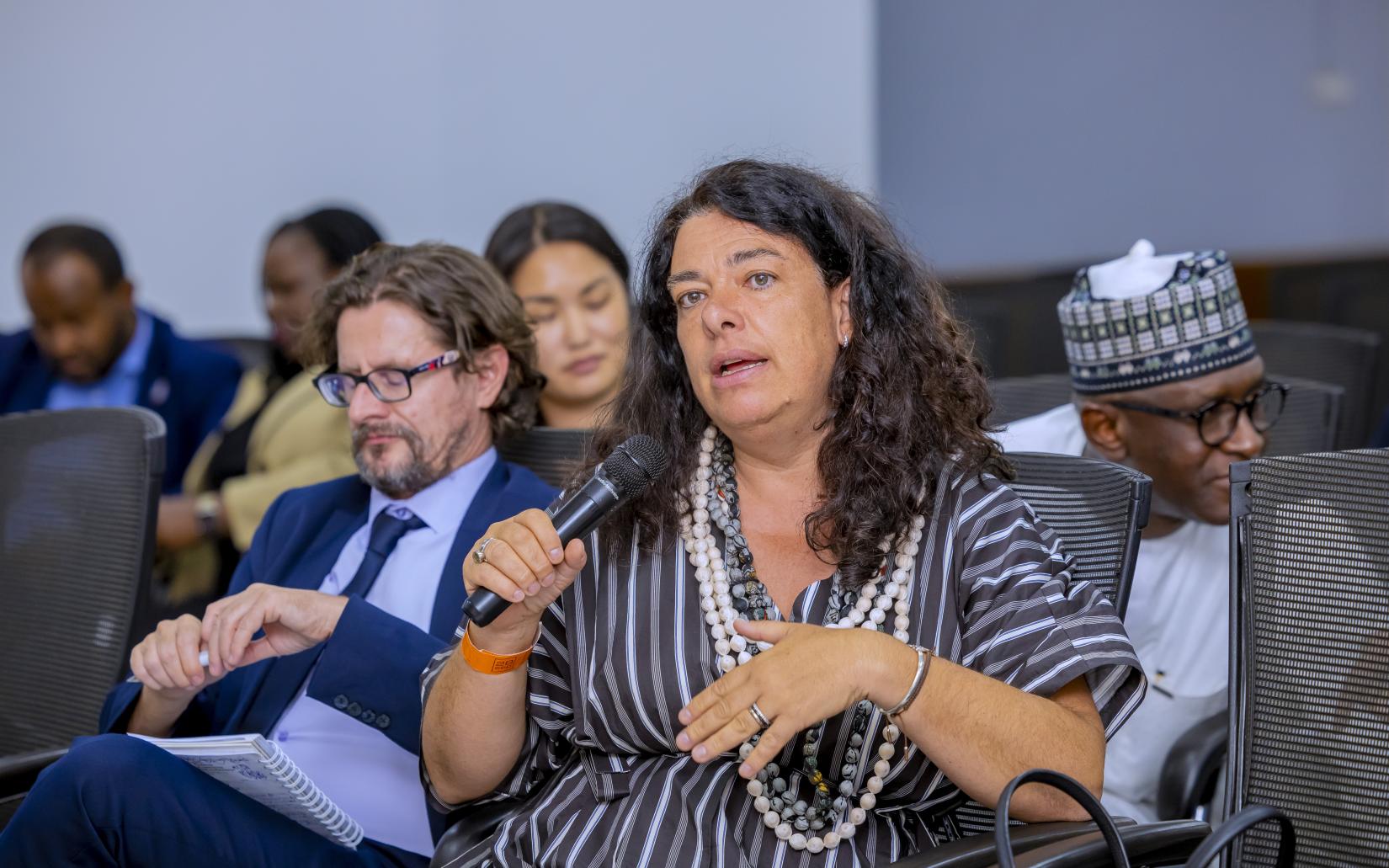
European Union Ambassador to Rwanda Belén Calvo Uyarra commended the United Nations and Government of Rwanda for contextualizing the Awaza commitments, and pledged the EU’s continued support to Rwanda through the APoA.
“We really appreciate how the UN and the Government of Rwanda are bringing the commitments from Awaza into the national context.” she added “Our focus is on impact — on building ecosystems and regional value chains that can truly make Rwanda a land-linked country. We are in this together.”
From the global perspective, Tomas Gonzalez, Team Leader for the Landlocked Developing Countries (LLDC) Portfolio at the United Nations Office of the High Representative for the Least Developed Countries, Landlocked Developing Countries and Small Island Developing States (UN-OHRLLS) emphasized the urgency of moving from framework to action.
“Awaza gave us a strong political and strategic framework, but the next step is translating that into results,” he said. “That means country-led implementation, data-driven follow-up, and stronger collaboration between governments, regional bodies, and development partners.”
Awaza at a Glance
Adopted at the Third United Nations Conference on Landlocked Developing Countries (LLDC3) in Awaza, Turkmenistan, the Awaza Programme of Action for 2024–2034 sets out a ten-year roadmap to accelerate sustainable development in the world’s 32 landlocked developing countries. The conference, which recorded the highest level of participation in the history of LLDC meetings, brought together Heads of State and Government, senior UN officials, development partners, and representatives of the private sector and civil society.
The Programme identifies five priority areas — connectivity and trade facilitation, structural transformation, digitalization and innovation, climate resilience, and partnerships and financing — and calls for stronger regional cooperation and international support to help LLDCs overcome high transport costs, limited market access, and vulnerability to external shocks. It is anchored in measurable targets and a results framework to ensure coordinated, data-driven implementation over the coming decade.



Written by

Eugene Uwimana
UN entities involved in this initiative
Goals we are supporting through this initiative